
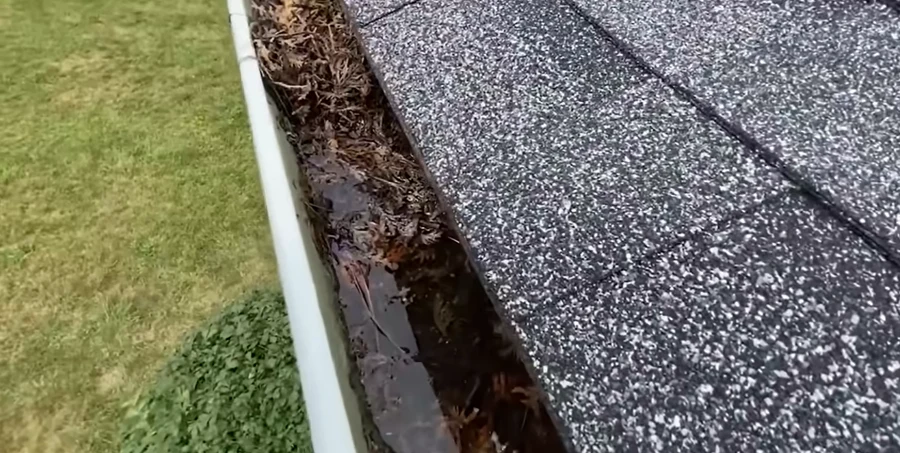
Gutter Guard Installation Richmond, VA
An honest assessment before any product recommendation — guards help some Richmond homes significantly and do very little for others
✅ Licensed & Insured
⚡ Same-Day Quotes
📸 Photo Proof Every Job
💲 Transparent Pricing
The Question That Matters: Do Guards Actually Work For Your Trees?
Most gutter guard companies skip this question because their business model is selling guards regardless. We’d rather have you not buy them if they won’t perform — because we’re also the ones who come back to clean your gutters when the guards don’t work as promised.
✅
Guards Genuinely Help If…
Your home is under broad-leaf deciduous trees (oak, maple, elm) with no significant sweetgum or loblolly pine nearby. Two-story or hard-to-access roofs where reducing cleaning frequency has real safety value.
⚠️
Guards Often Disappoint If…
Sweetgum trees are anywhere near the house (gumballs clog downspout openings guards don’t protect). Loblolly pines nearby (fine needles bypass micro-mesh and accumulate in the mesh itself).
❌
Guards Won’t Work If…
You have box gutters — no standard guard can attach to a built-in box gutter trough. Or if you expect zero maintenance after installation; that’s not realistic with any guard type.
Free Quote — No Obligation
Tell us your tree situation — we’ll give you an honest answer before quoting any product.
Answer in 2 minutes · No on-site estimate required first
Richmond’s Tree-Specific Guard Performance Guide
Based on what we actually see across Richmond neighborhoods — not manufacturer claims:
- ✅Willow Oak (Fan District, Museum District) + Micro-mesh: Good performance. Small leaves land on top of mesh and blow off in wind. Cleaning frequency reduced from 3–4x/year to 1x/year.
- ✅Sugar Maple (citywide) + Micro-mesh: Good performance. Larger leaves don’t penetrate; seed helicopters mostly bounce off. Twice-a-year cleaning becomes once every 1–2 years.
- ✅Sweetgum (citywide) + Any Guard Type: Poor performance. Guards don’t protect downspout openings. Gumballs accumulate at the drain point, not in the trough. Overflow still happens.
- ✅Loblolly Pine (West End, Short Pump, UofR area) + Any Guard Type: Poor to fair performance. Fine needles work through micro-mesh and accumulate in the mesh itself. Creates a debris mat on top of the guard.
- ✅Tulip Poplar (common throughout) + Micro-mesh: Fair performance. Large leaves don’t penetrate but can cover the mesh surface. Storm events push large quantities quickly.
Guard Types — What We Actually Recommend
🔬
Stainless Micro-Mesh (Best)
316 stainless steel mesh over a rigid aluminum frame. Genuine micro-mesh (not plastic imitations) outperforms every other type for broad-leaf debris. More expensive but the only type we recommend for most Richmond installations.
🌊
Reverse-Curve (Limited Use)
Water follows the curve into the gutter; debris falls off the edge. Works on light leaf loads and shallow-pitch roofs. Fails in Richmond’s heavy summer thunderstorm events where water volume exceeds the surface tension effect.
🚫
Foam Inserts (We Don’t Install)
Foam accumulates debris inside the pores, promotes mold and plant growth, and is extremely difficult to remove cleanly. The foam also degrades in Virginia’s UV and summer heat within a few years.
$600–$1,900
Typical micro-mesh installation · 100–200 linear feet · Richmond, VA
$3.50–$9.50 per linear foot depending on type · Micro-mesh: $6–$9.50/ft · Budget also for 1 cleaning/yr even with guards installed
📞 Call for Your Quote
Gutter Guard FAQs — Richmond, VA
Get an Honest Guard Assessment for Your Specific Home
Tell us what trees are near your house and we’ll tell you straight whether guards make sense — before we talk about products or pricing.